Synchronization With the Client
In 2026, businesses and customers exist in different time frames—and this gap has become critical. 82% of customers expect a response to a sales inquiry within 10 minutes, while 89% consider a response to an email within one hour to be the norm. The reality is different: the average response time for businesses to customer inquiries is 42 hours—a gap of more than 11 hours that has transformed speed from a convenience into the sole criterion for a brand’s survival.
Generation Z feels this particularly acutely. Customers born between 1997 and 2012 expect a response in less than 10 minutes via chat or social media—and 84% of them will abandon a brand for good after just two instances of slow service (66% leave after just one). Millennials are slightly more tolerant (expecting a response within an hour), while Generation X and Baby Boomers are willing to wait between 4 and 24 hours. But demographics are shifting rapidly: today, 73% of all customer interactions come from the audience that demands a response in less than an hour.
In addition, the “9-to-5” work schedule no longer aligns with customer behavior. 85% try to message businesses via instant messengers outside of business hours, 78% expect the service to adapt to their time zone, and 64% see no difference at all between weekdays and weekends when it comes to response times. In B2B, the situation is even more acute: managers ignore 74% of customer inquiries due to outdated work policies and being overloaded with work. The excuse “we’ll respond during business hours” no longer works—neither in B2C nor in B2B.
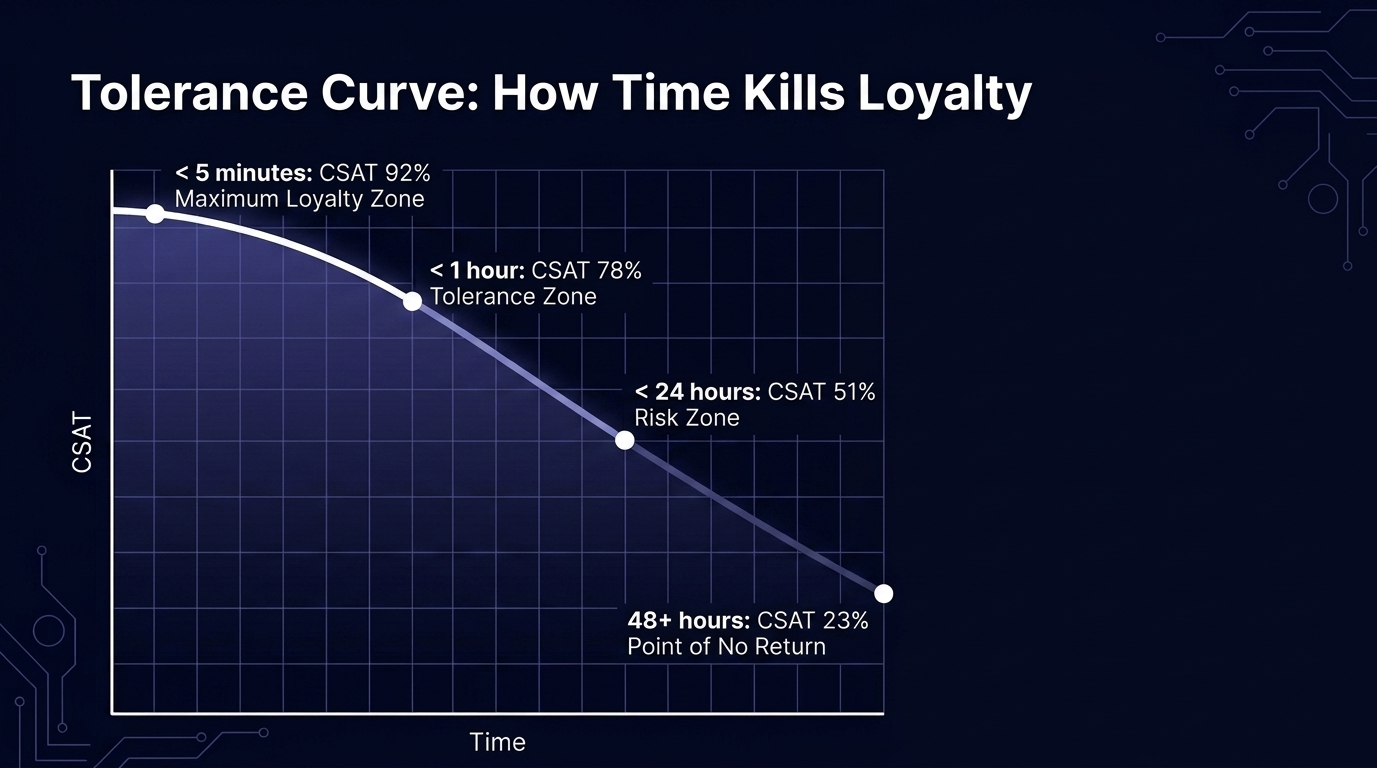
The cost of delay is measured not only in CSAT scores but also directly in dollars. Leads contacted within the first 5 minutes—the “golden window”—are 21 times more likely to convert into a deal. But after just 30 minutes of waiting, 39% of leads “cool off” completely and go to competitors. The average cost of losing a single customer due to slow service is $243, and a lack of timely support reduces the likelihood of a successful upsell by 34%. On a global scale, this amounts to $75 billion in lost revenue for businesses worldwide each year.
The problem isn’t that companies don’t want to respond faster—it’s simply that manually processing requests physically can’t keep up with customer expectations, especially at night, on weekends, and outside of managers’ working hours. This is where a paradigm shift is taking place: from chatbots with rigid scripts (which fail to understand context and cause frustration) to Agent AI—systems that independently follow the path of “perception → thinking → action”: they analyze context and CRM history in real time, make decisions based on the company’s business logic, and perform the final action via an API—from updating data to creating a ticket—without human intervention in routine stages.
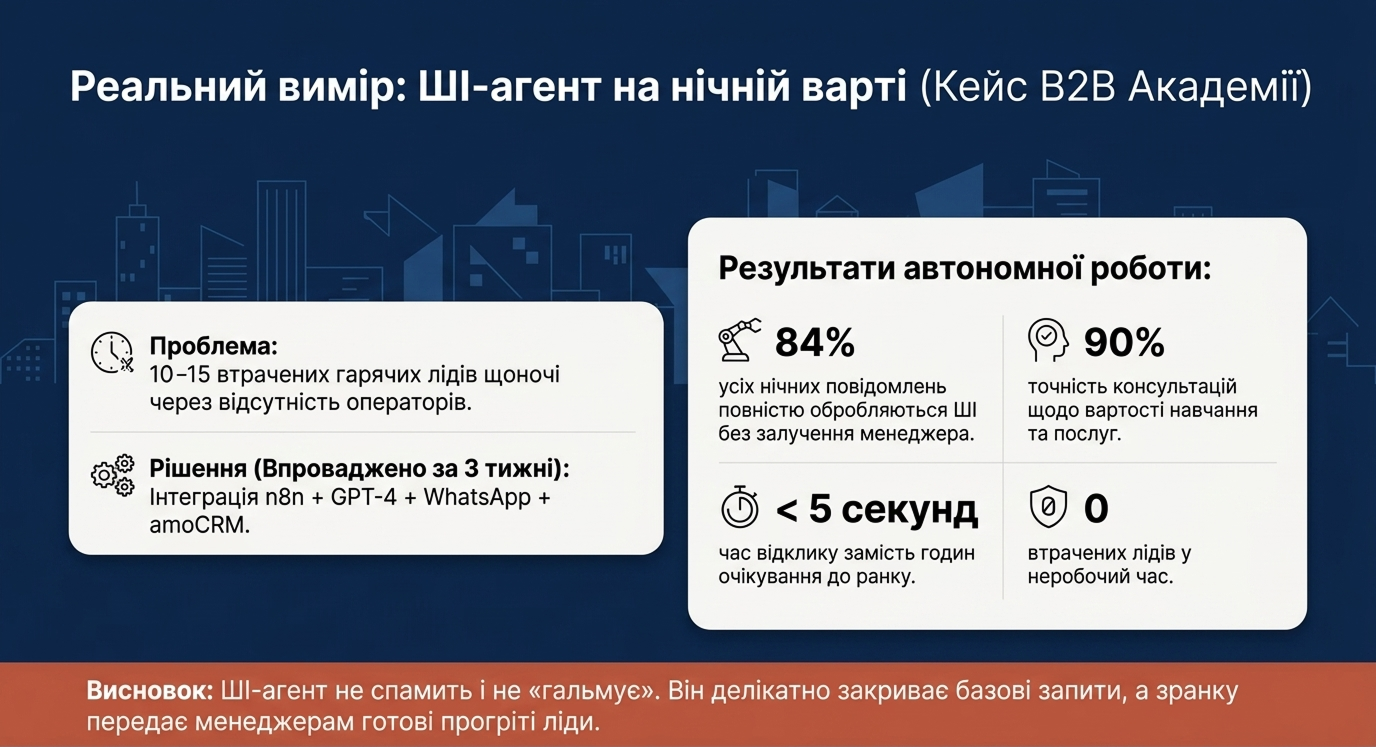
Before implementation, the business was losing 10–15 hot leads every night simply because there were no operators available to answer calls. This isn’t an isolated case—the same logic applies to any niche with nighttime or after-hours customer traffic: dental clinics, real estate, and auto detailing. The AI agent doesn’t “spam” and doesn’t try to replace a manager—it tactfully handles basic inquiries around the clock, and in the morning, it passes on pre-qualified leads to the team along with the full context of the conversation.
Would you like an AI agent like this for your business?
Boostanova implements turnkey AI agents—from consultation to integration with your CRM—as demonstrated in the case study above.